
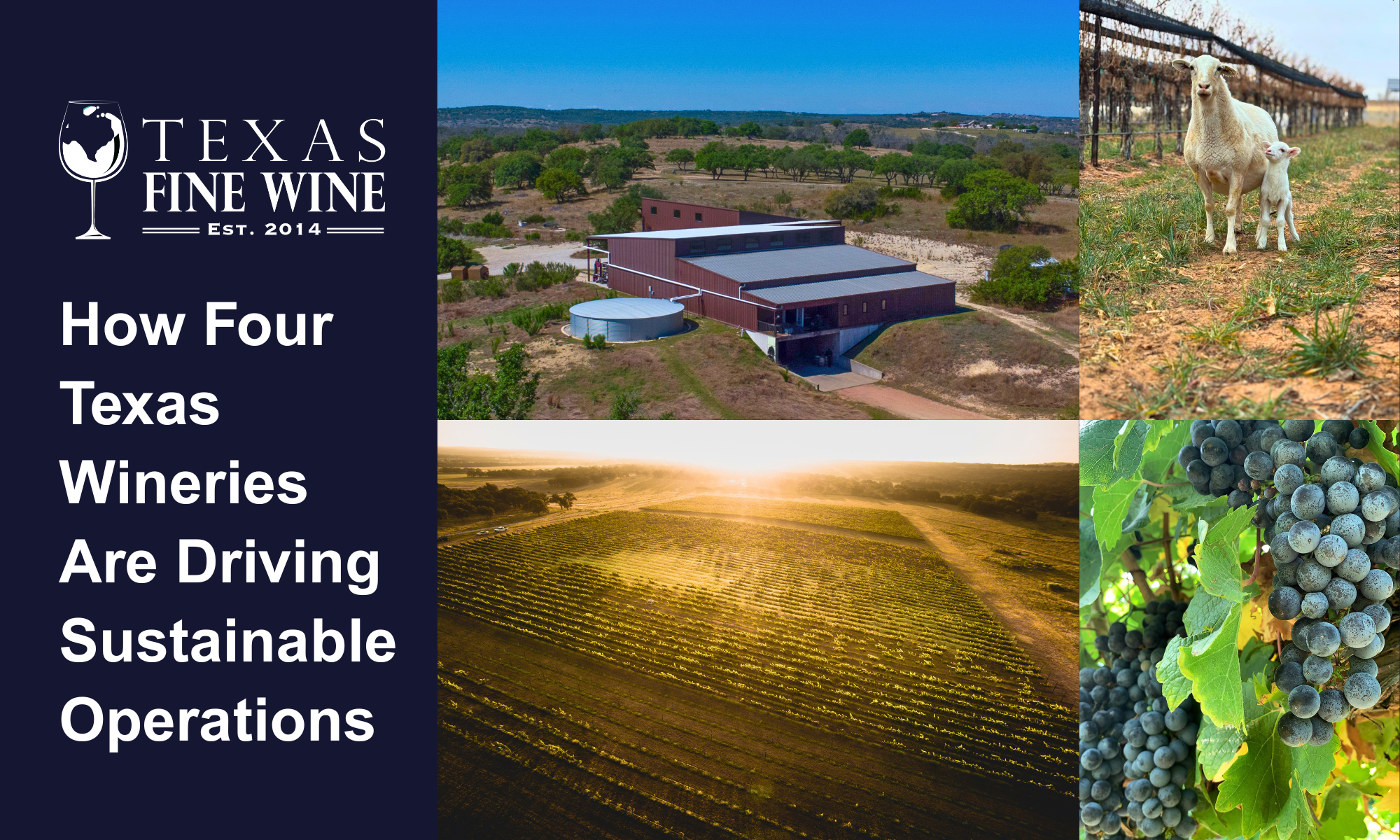
- Sustainability is being built into the foundation, not bolted on. Sustainable practices such as Pedernales Cellars’ underground cellar and geothermal cooling system to using lighter bottles and eliminating foil capsules are considered operational necessities rather than afterthoughts.
- Organic farming, water conservation and climate adaptation are existential priorities. Texas wineries are responding creatively to the realities of an erratic, warming climate – from sourcing fruit from the state’s newest certified-organic vineyards and using rainwater collection tanks to diversifying into higher-elevation vineyards – proving that resilience and quality can go hand in hand.
- Sustainability and innovation go hand in hand. From pioneering Texas’ keg program to offering the first wines aged in Texas White Oak, Texas wineries are innovating and introducing new sustainable practices to the state. Bending Branch’s Texas White Oak program helped launch a Texas White Oak cooperage, supporting local forestry and reducing dependence on foreign barrels.
Texas wine is growing up – and growing greener. From the Texas Hill Country to the Texas High Plains, a new generation of Texas wineries is proving that world-class wine and environmental stewardship aren’t mutually exclusive. Bending Branch Winery, Pedernales Cellars, Duchman Family Winery and Spicewood Vineyards are among the wineries setting the standard for sustainable practices in the vineyard, the cellar and the community.
Pedernales Cellars: Energy Innovation and Organic Sourcing
Located in Stonewall, Texas, Pedernales Cellars has built sustainability into its infrastructure from the ground up – literally. The winery was the first in Texas to install an underground cellar, using the natural insulation of limestone and cooling soil to dramatically reduce energy costs. That foundation is complemented by a geothermal cooling system and a combination of CFL and solar lighting throughout the facility.
Water conservation is equally central to Pedernales’ approach. A 55,000-gallon rainwater collection tank supplies irrigation for landscaping, and ground cover management minimizes water loss across the property. Compost generated at the winery is recycled back into the vineyard, closing the loop on organic waste. Natural pest management relies on local species rather than chemical interventions.
Pedernales Cellars is among the founding partners of the Roadmap to Sustainability in Texas Wine project, led by Texas State University professor Colleen Myles, Ph.D. The goal is to create a Sustainability in Practice certification for Texas.
On the sourcing front, Pedernales partners with Desert Willow Vineyards in the Texas High Plains, one of the first certified organic vineyards in Texas, and has already released its Aletheia Rosé made from organic Grenache and Mourvèdre — with five more organic wines from the 2024 vintage. These wines will carry the EcoCert certification, providing third-party verification of their organic credentials. The winery has also reduced its carbon footprint by switching to a 15% lighter bottle and eliminating foil capsules for its distribution wines. Pedernales extends its values to its workforce, offering health care, PTO, flexible scheduling and paid parental leave to all employees, including hourly workers.
Bending Branch Winery: Organic Certification and Texas Innovation
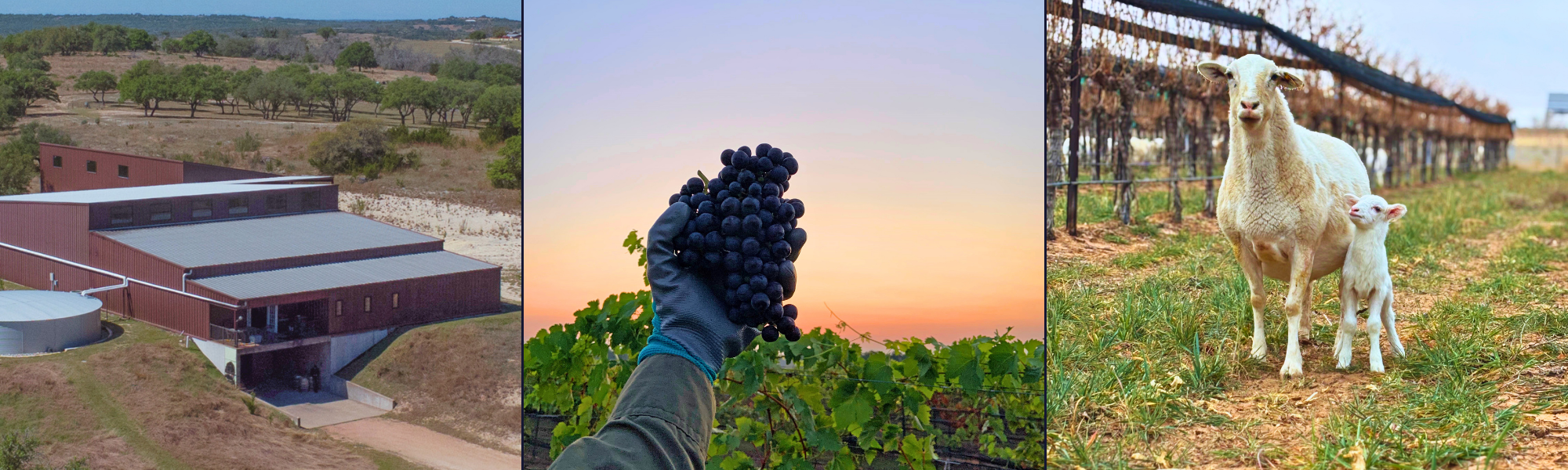
Bending Branch Winery in Comfort, Texas, led by Dr. Bob and Brenda Young, is in active pursuit of USDA organic certification for its estate vineyard and winemaking; the application was submitted in 2026. The estate vineyard focuses on Pierce’s Disease-resistant varieties and employs chickens and bat homes for natural pest control, avoiding synthetic pesticides.
Beyond the estate, Bending Branch sources organic grapes from seven Texas growers, including Desert Willow Vineyards and Y Knot Vineyards, the first two certified organic vineyards in the state. Like Pedernales, the winery uses lighter glass bottles and has eliminated foil capsules, while maintaining routine cardboard and glass recycling programs.
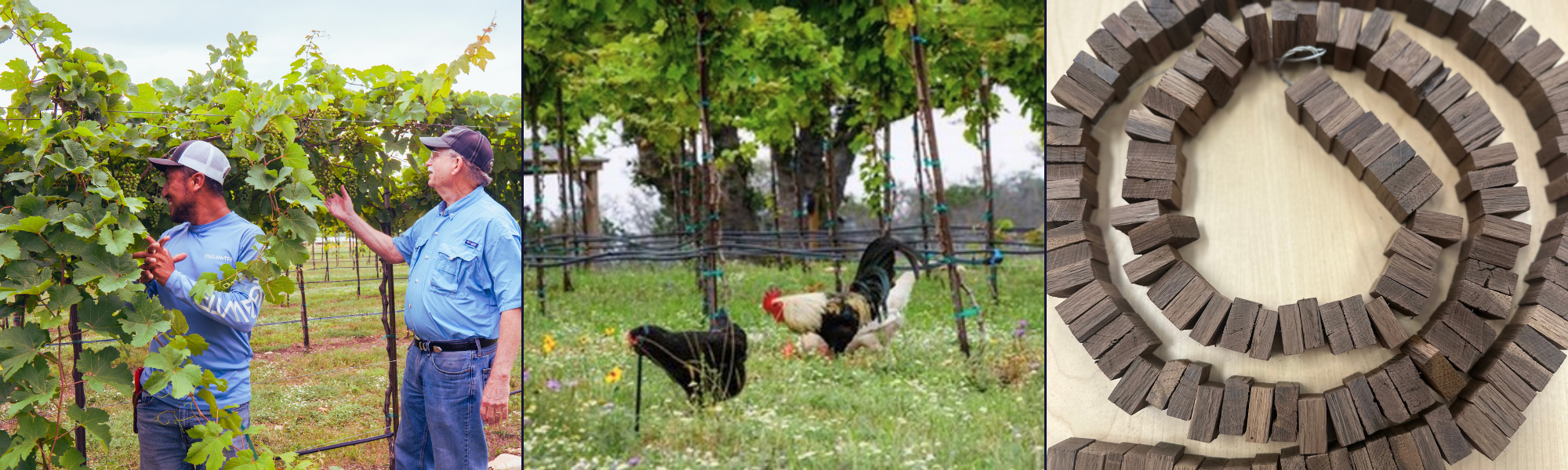
One of Bending Branch’s most distinctive contributions to Texas wine is its pioneering work aging wine in Texas White Oak – a six-year project that resulted in the award-winning 2021 Texas Cowboy Cuvée Reserve that earned Double Gold at the San Francisco Chronicle Wine Competition and Platinum at the 2026 Fort Worth Stock Show & Rodeo. The success of this program helped catalyze the launch of a Texas White Oak cooperage, supporting local forestry and reducing dependence on imported barrels. President Alison Young brings further environmental credibility as a LEED Accredited Professional with a master’s degree in environmental management.
Duchman Family Winery: Reuse, Recycling and Responsible Sourcing
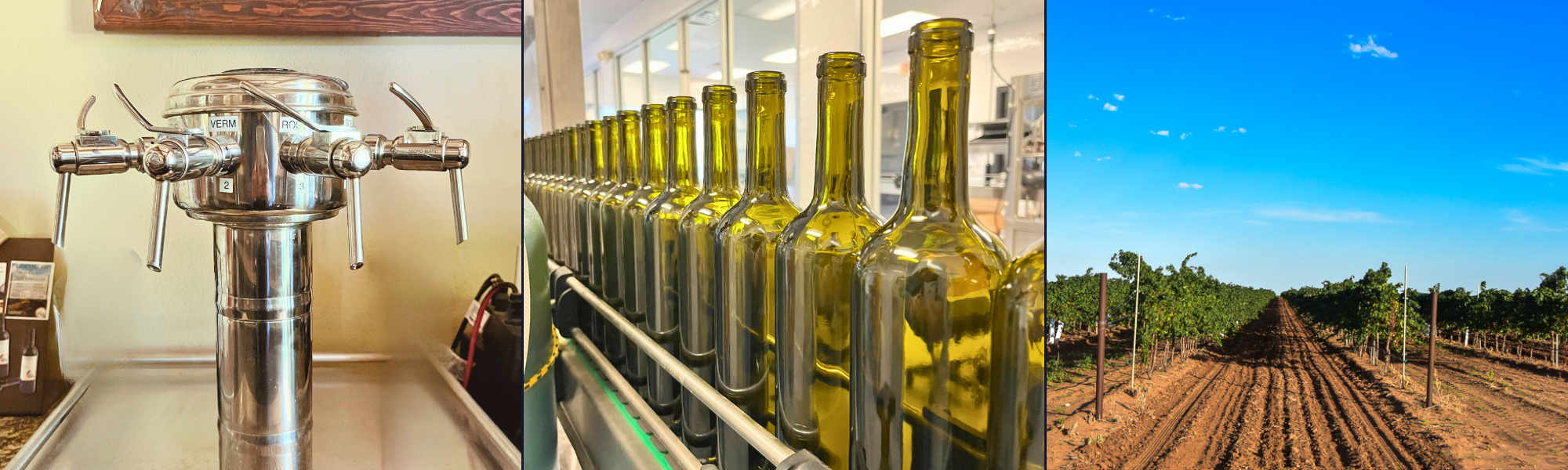
Duchman Family Winery, just 30 minutes outside Austin in Driftwood, has long been ahead of the curve on reducing single-use packaging. The winery launched one of the first keg programs in Texas – most notably supplying Whole Foods Market as early as 2010 – and continues to offer reusable growlers for wine on tap, significantly cutting down on glass waste. Given its proximity to Austin and high visitor traffic, bottle recycling is a priority.
Duchman also partners with growers who share its sustainability values, including Bingham Family Vineyards on the Texas High Plains. Bingham Family Vineyards, originally an organic row crop operation that transitioned to grapes, uses a subterranean drip irrigation system to conserve water, wider vine spacing to maximize rainfall absorption and allow cover crops, and intentional soil management to improve fertility and prevent erosion.
Spicewood Vineyards: Climate Adaptation as a Sustainability Strategy
Spicewood Vineyards, one of the oldest Hill Country estates in Texas, has developed a sophisticated response to the region’s increasingly erratic climate – from late spring freezes to summer heat domes. The winery employs wider vine spacing, strategic leaf pulling, and higher fruiting zones to improve airflow and reduce heat stress and uses vineyard netting to protect against hail damage.
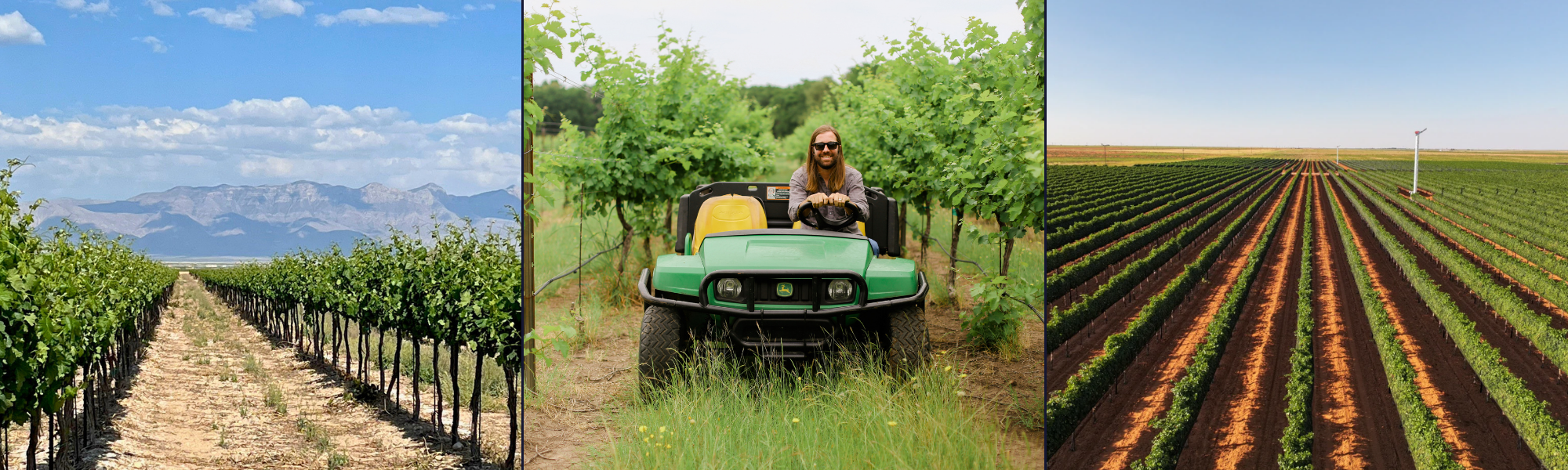
Recognizing that climate resilience requires geographic diversification, Spicewood has invested in vineyards at higher elevations across the state. Dell Valley Vineyards in Far West Texas, near the Guadalupe Mountains at 3,000–4,000 feet of elevation, benefits from significant diurnal temperature shifts and dry, windy conditions that naturally reduce disease pressure. At Friesen Vineyards in the Texas High Plains, grower John Friesen employs cover crops to prevent erosion and enhance soil health, alongside integrated pest management practices that minimize chemical use and support long-term biodiversity.
A Sustainable Future for Texas Wine
Together, these four wineries represent a growing movement within the Texas wine industry — one that treats environmental stewardship as a core operating principle. Whether through organic certification, renewable energy, water conservation or climate-adaptive viticulture, Bending Branch Winery, Pedernales Cellars, Duchman Family Winery and Spicewood Vineyards are demonstrating that the future of Texas wine is as much about how it’s made as what’s in the glass.